
What Woke Up
An ancient discovery in a salt mine

I have been in a lot of mines. More than I can count, honestly, and more than I should probably admit to. Old abandoned shafts in the American West where the timbers are black with rot and the air tastes like iron. Tunnels so collapsed that the only way in is to get on your belly and slide through on your back, arms flat against the rock, hoping the ceiling holds for another thirty seconds. Every single time I have done this — every single time — I have told myself afterward that I will never do it again.
I always do it again.
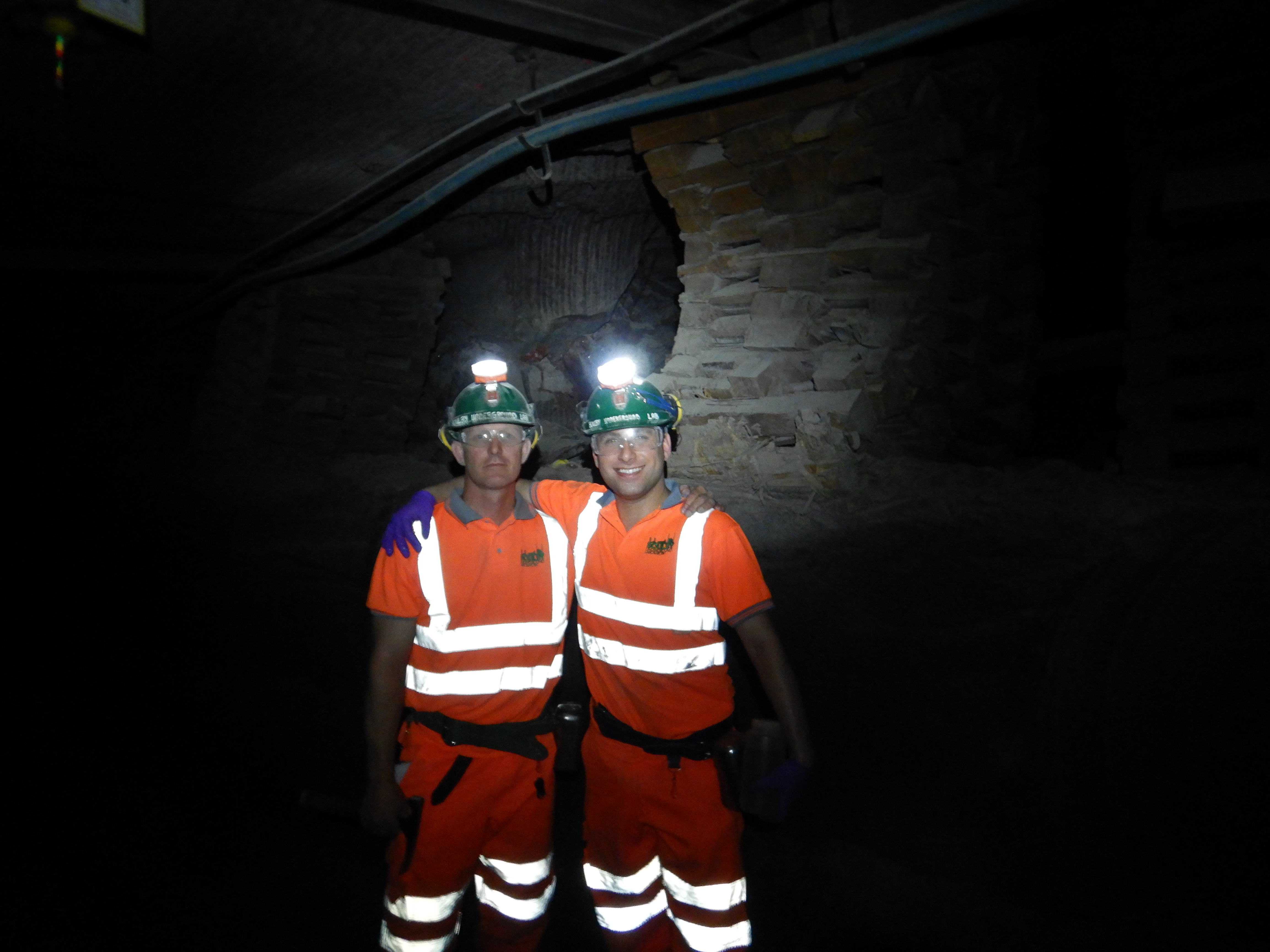
This time, I was a mile underground in northeastern England. Scott was ahead of me — my colleague, my friend, the kind of person who genuinely wants to go where no one else wants to go. Somewhere ahead of him was a local miner whose English accent was so thick I could not understand a single word he said. Scott could, I think. Or maybe he couldn’t. I’m not entirely sure that distinction mattered, because somehow the three of us ended up walking into a section of the mine that was closed off.
The mine itself is enormous — over six hundred miles of tunnels carved out since the 1960s, stretching beneath the North Sea. But we weren’t in the main tunnels.
The main tunnels are cool. The mine pumps fresh air down from the surface continuously, and it keeps everything at a workable temperature. You wouldn’t guess you were underground at all, not really — not from the air, not from the smell. I was expecting salt. I had spent the better part of a week down there and I never once tasted it or smelled it. The mine doesn’t smell like anything. It just breathes.
The section was behind steel doors. Thick ones, locked. The kind of doors that are there for a reason. The miner had keys — keys he probably shouldn’t have had, given how long he’d been working this mine and how little interest he seemed to take in what was and wasn’t off-limits. He opened them like it was nothing.
The air hit first. Or rather, the lack of it. My first thought was that it was thick and humid — heavy, somehow, pressing against my chest. It took me a while to understand what was actually happening. There wasn’t much air there at all. The oxygen was low. The space had been sealed off, and whatever atmosphere had been in there had gone stale long before we arrived. I was struggling to breathe, and for the first few minutes I didn’t fully understand why.
We weren’t unprepared for it. The miner had a carbon dioxide sensor on him — it would trigger an alarm if the air got dangerous enough that we’d need to use our emergency oxygen kits. We all carried them. It was standard protocol. But knowing the equipment was there didn’t stop the feeling in my chest. It just meant I knew we’d survive it.
Then the heat. Not the cool, ventilated air of the main tunnels — this was the Earth’s own heat, radiating up from below with nothing to carry it away. It was brutal.
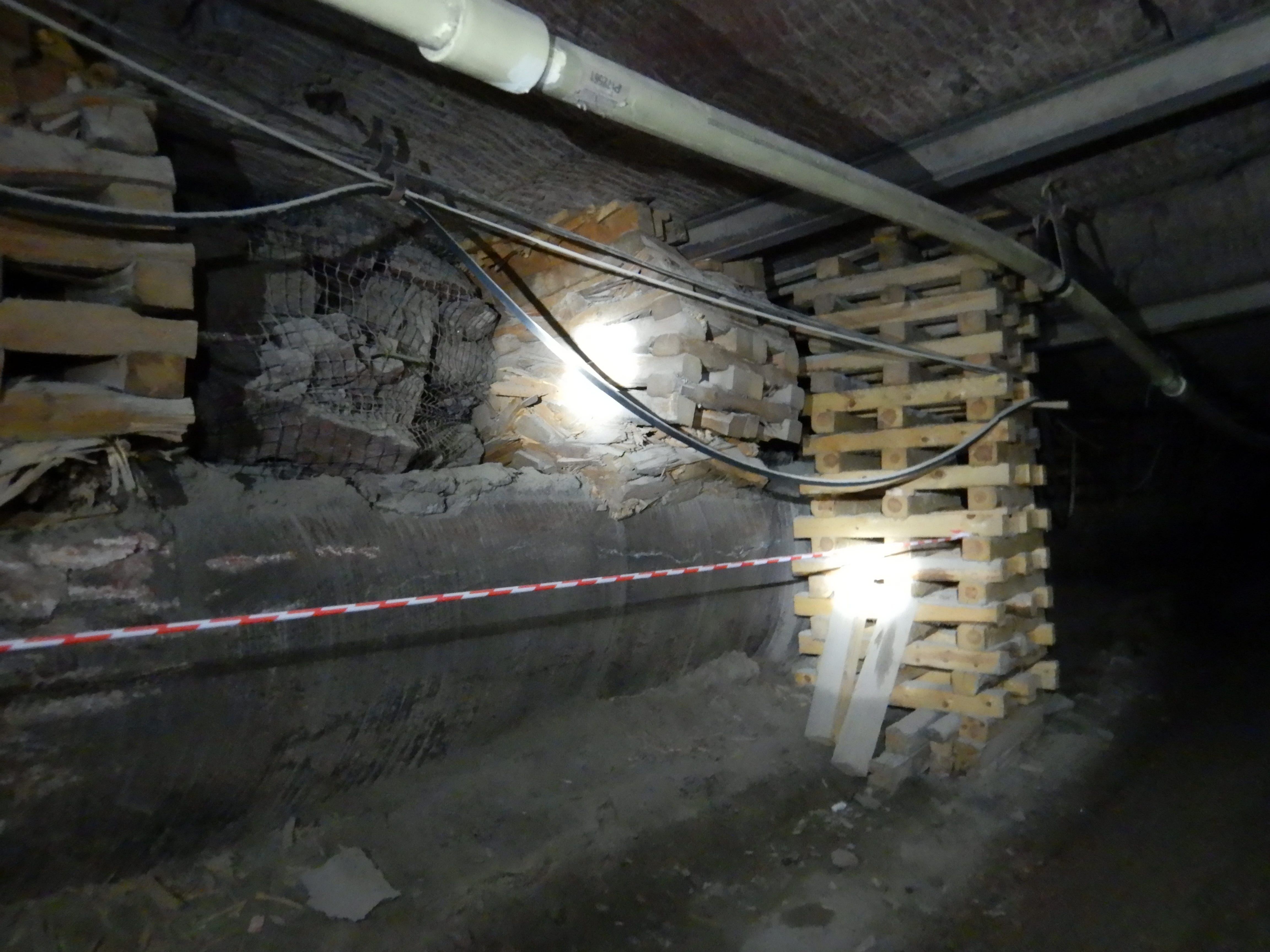
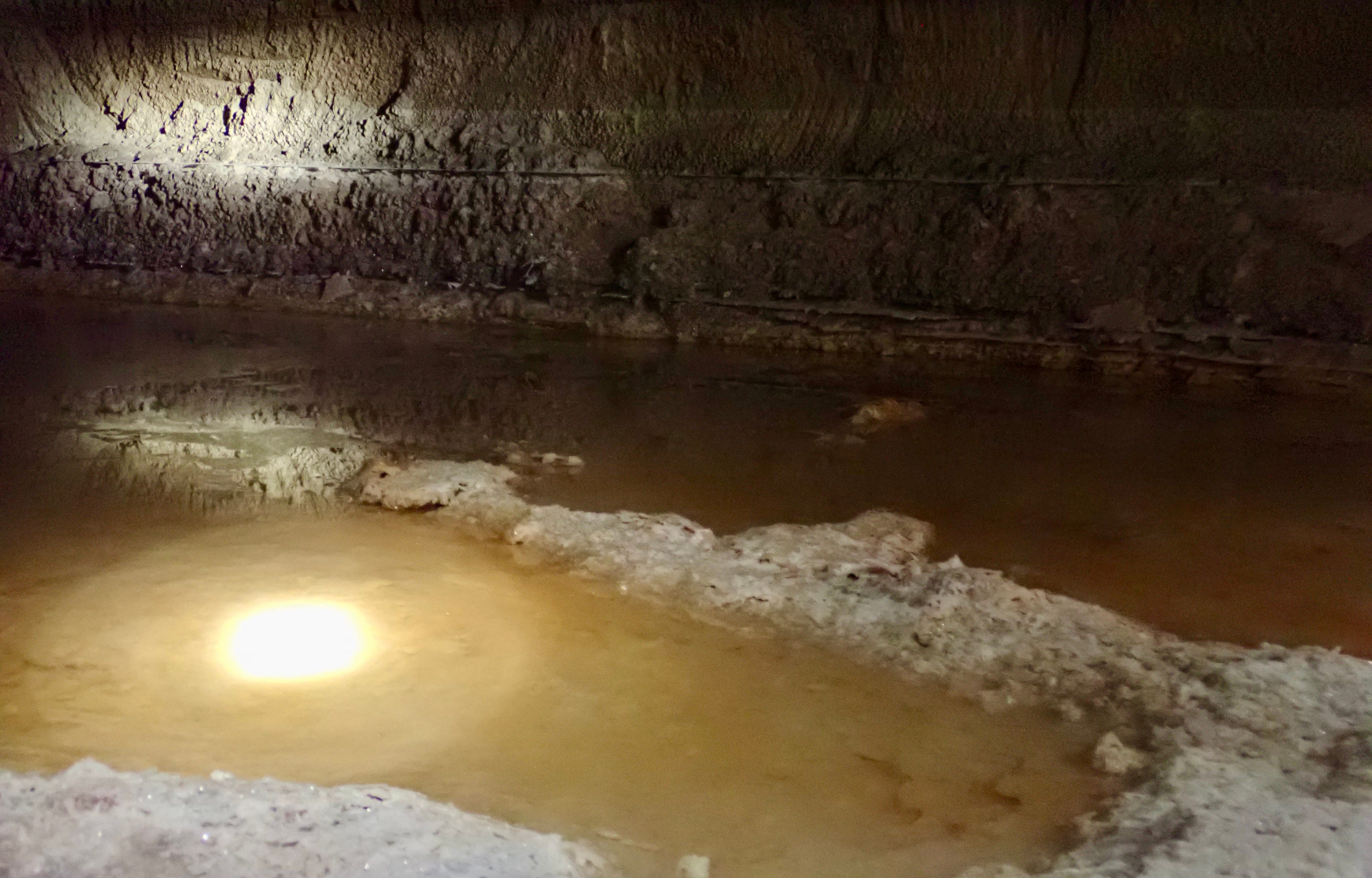
And then, as my eyes adjusted, the rest of it. Caved-in tunnels. Wooden support beams splintered and crushed under tons of rock that had simply given way. We were walking through a newly carved shaft, right next to the evidence of what happens when a mine collapses. We knew, roughly, why this section was closed. A lake — an ancient pocket of brine sealed underground for longer than we could easily say — had been dissolving the halite crystals in the surrounding rock. The water was weakening the walls. It had already won, in places.
We walked about a quarter of a mile to reach the lake. It felt like ten.
The miner suggested we turn off the headlamps.
I don’t remember if it was a dare or a genuine impulse. It might have been both. But we did it — all three of us, standing in a section of a mine where the ceiling had already failed before, in the dark, with no air moving, and we just listened.
You can hear the Earth move.
I don’t mean that metaphorically. The rock shifts. It creaks and settles under its own weight, under the tidal forces of the moon pulling on everything — the ocean above, the rock, all of it. It sounds alive. It sounds like something enormous is breathing very slowly, and you are inside of it.
The darkness is absolute. I closed my eyes. I opened them. There was no difference. None. My body didn’t know which way was up. I had to consciously think about where my feet were, whether the ground was still there. It was. But my brain had stopped trusting it.
That’s when it got real.
I have been scared in mines before. I have felt the adrenaline, the tight chest, the voice in the back of my head that says *get out now.* But standing there — the heat, the collapsed tunnels behind us, the knowledge that the lake was actively dissolving the rock around me, that the water could open up a conduit to the North Sea above and flood the entire mine, that bacteria in that water could produce methane and turn this sealed chamber into a bomb — all of it hit at once. I nearly lost it completely.
I blamed it on the heat. “Let’s get out of here before I pass out,” I said. It was true enough — the heat was brutal — and it gave me a reason to move that didn’t require explaining what was actually happening in my chest.
But we didn’t leave. Not yet. Because this was the only place in the entire mine — the only place we had found anywhere close to it — where we had access to water that hadn’t been touched by anything in hundreds of millions of years. And that water was full of something extraordinary. We just didn’t know it yet.
We collected what we could. Volkovskite — a rare mineral found in only a handful of places on Earth — crystals growing out of the ancient walls. And the brine itself, carefully, from the pocket of water that had been sitting there since before the dinosaurs existed. We filled our containers. We got out.
And we went back down to the lab.
The lab had bathrooms. I want to say that again — bathrooms. And internet. I have been in a lot of underground places, and I have never once expected either of those things. But here we were, a mile below the surface of the Earth, in a facility that was genuinely well-equipped. It was jarring in the best way. You step out of a collapsed, oxygen-depleted, sweltering section of mine where the walls are actively crumbling, and you walk into a room with fluorescent lights and running water and a coffee maker. The contrast was almost funny.
There were four of us on the team — all part of a NASA expedition. Scott, my colleague and friend from the Jet Propulsion Laboratory. Preston. Erika. We were part of the Origins and Habitability NASA research team, and we were down here for a specific reason: we wanted to find life where no one had detected it before.
We had brought a microscope with us. Not a standard one — a digital holographic microscope called Shamu. It has no moving parts. It can image objects down to the cellular level. And it’s the kind of instrument that might, someday, travel to the outer solar system — to the moons of Jupiter or Saturn — to look for life in the oceans locked beneath their icy surfaces. That’s why we were here, in this particular mine, in this particular extreme: we were testing the equipment and the methodology in an environment on Earth that might mirror what we’d find out there.
But the deeper question — the one that kept pulling at me — wasn’t really about the equipment. It was simpler than that, and harder.
How does life persist here?
We are a mile underground. There is no sunlight. There hasn’t been sunlight reaching this rock in 250 million years. The crushing weight of the Earth is above us. The air in the sealed sections barely has oxygen. And yet — life is here. We found it. So the question becomes: what is keeping it alive?
The answer might be heat. The Earth generates its own warmth from deep within, and that heat radiates upward through the rock. It doesn’t need the sun. It’s just there, always, pushing energy into the system. If that’s enough to sustain life — and what we found at Boulby suggests it might be — then the cold of deep space becomes less of an obstacle than we thought. As long as there is a planet, there might be heat. And where there is heat, there might be life.
But heat isn’t the only source of energy down here. Tidal forces matter too. The moon pulls on the Earth — on the oceans, on the rock, on everything — and that pulling creates friction. Friction creates heat. Now think about the moons of Jupiter and Saturn. Io. Enceladus. Europa. They are being pulled apart by tidal forces so extreme that the friction generates enough heat to keep liquid water churning beneath their surfaces. If life can survive on tidal heat here, it might be doing exactly that on the other side of the solar system.
And then there’s radiation. Life on Earth evolved, overwhelmingly, to avoid it. But not always. After the Chernobyl disaster, organisms began thriving in the radioactive environment — adapting to it, using it. The gas giants and their moons are bathed in intense radiation as they move through the powerful magnetic fields of Jupiter and Saturn. If life can learn to live in radiation, then those environments stop being dead zones. They become possibilities.
Three energy sources. Three reasons that life might exist in places we once assumed were uninhabitable. And we were in a salt mine in northeastern England, looking at ancient water under a microscope, trying to understand how.
The first thing that happened didn’t even require the microscope.
The brine samples had been sealed in test tubes the entire time — from the moment we collected them in the underground lake, through the transport back to the lab, all of it. We kept them in a customized Pelikan case, the kind designed to protect sensitive samples from any change in conditions. Sealed, dark, undisturbed.
I held the first tube up to the light. And it struck me — here was liquid water, pulled from a place where roughly 270 atmospheres of pressure were pressing down from above. Nearly 4,000 pounds per square inch. The kind of pressure that should crush things. But water doesn’t work that way. It’s nearly incompressible — under the full weight of a mile of rock, it shrinks by about one and a half percent. That’s the same property that makes hydraulic excavators work, the reason a machine filled with fluid can move mountains. The brine in that lake had been sitting there, holding its shape, holding its chemistry, for longer than the dinosaurs existed. The pressure wasn’t a threat. It was just the weight of the world, and the water had simply refused to give way.
When we took the tube out of the case, it was crystal clear.
And then, as light hit it, it started to change. First it went milky. Then milky pink.
Which meant that these creatures — halobacteria that had been buried, sealed, entombed in salt for hundreds of millions of years — still carried the genetic instructions to defend themselves against the Sun.
Think about what that means. These organisms have not seen sunlight since before the dinosaurs existed. They have been locked in darkness, under a mile of rock and sediment, for a span of time so vast it resists easy comprehension. And yet somewhere in their DNA, the knowledge of the Sun is still there. Still active. Still functional. The salt didn’t just preserve their bodies. It preserved their memory of a world they have not touched in geological ages.
To understand how they got there, you have to go back further. 250 million years, to the end of the Permian period. There was a sea. Not a small one — the Zechstein Sea stretched from what is now the east coast of England all the way to Belarus, from southern Norway down to the Czech Republic. A vast, shallow body of water, open to the sky, teeming with life.
And then the tectonic plates shifted. The sea got cut off from the rest of the world’s ocean. Slowly, over time, it began to evaporate. The water became saltier. And saltier. Until it was so saturated that crystals started forming — halite, growing out of the brine, encasing everything in it. The organisms didn’t escape. They didn’t need to. The salt closed around them, and it held.
Layer by layer, over millions of years, sediment piled on top. The sea floor sank. What had once been open water became buried rock, pressed deeper and deeper into the Earth by the weight of everything above it. The surface moved farther away. The light disappeared. And the organisms went with it — sealed inside crystals, inside a lake, inside a mine that wouldn’t exist for another 249 million years.
But the gene for beta-carotene stayed. Waiting, apparently, for the one moment when something would expose them to light again.
We did that. We were the first thing in hundreds of millions of years to let them see the Sun.
The second revelation required Shamu.
We set up the holographic microscope and began imaging the brine samples. And there they were — the halobacteria themselves, visible, moving. Zipping through the field of view. Alive. Not dormant, not residual, not a chemical ghost of something that used to be living. Alive and active, right there on the screen, a mile underground in a laboratory that also happened to be a testing ground for instruments that might one day search for life on the moons of Jupiter.
We saw them.
After everything — the locked doors, the collapsed tunnels, the darkness, the near-panic, the oxygen-depleted air — after all of it, this was the moment. Not a reading on an instrument. Not a statistical anomaly in the data. We looked through a microscope at water we had pulled from an ancient lake sealed inside the Earth, and we watched something alive move.
The obvious question — the one any scientist would ask, and any skeptical reader should ask — is: how do you know you didn’t contaminate the sample? We were careful. Gloves. Sterilized equipment. Every step of the collection and handling was designed to keep outside organisms out. But careful isn’t proof. Proof came later, from the DNA.
When we sequenced the DNA of the organisms in the brine, they matched nothing we had ever seen before. They were new to science. Entirely new. Not a known species, not a close relative of something in our databases. Something that had been isolated long enough — sealed away long enough — to diverge from everything else living on the surface of the Earth.
And that’s the thing. If we had contaminated the sample, we would have found modern bacteria. Something familiar. Something that belongs to the world up there, the one with sunlight and air and open water. We didn’t find that. What we found was something that had been cut off from that world for so long that it had become unrecognizable. The salt had preserved it — but it had also isolated it, for longer than most people can easily grasp, into something entirely its own.
We still don’t know what energy source it’s using.
We know the candidates. Heat from the Earth’s interior. Tidal friction. Radiation. One of those, or some combination, or something we haven’t thought of yet. But the organism itself hasn’t told us. Not yet. It’s been sealed away for 250 million years, surviving on something, and we are only beginning to understand what.
That’s what stays with me. Not the pink brine, not the moment we saw them move — though both of those will stay with me for the rest of my life. What stays with me is how much we still don’t know. We went down into that mine looking for life, and we found it. But finding it didn’t close the questions. It opened them.
The mine is still there. But the sealed sections where we found the lake — where we stood in the dark and listened to the Earth move — those have been flooded now. The ancient brine we collected might be all that’s left. The place that held those organisms for 250 million years is gone, and we were there just before it closed forever.
Which means the questions we still can’t answer — what energy source keeps them alive, how long they can truly persist, what they might tell us about life elsewhere — we will have to answer them with what we already have. What we pulled out of that lake in the last hours before it disappeared. Or we wait. Somewhere in the world, another ancient lake will be found. Another pocket of brine, sealed in salt, holding something we haven’t seen before. And when that happens, I’ll be there.
I know I said I would never do it again.
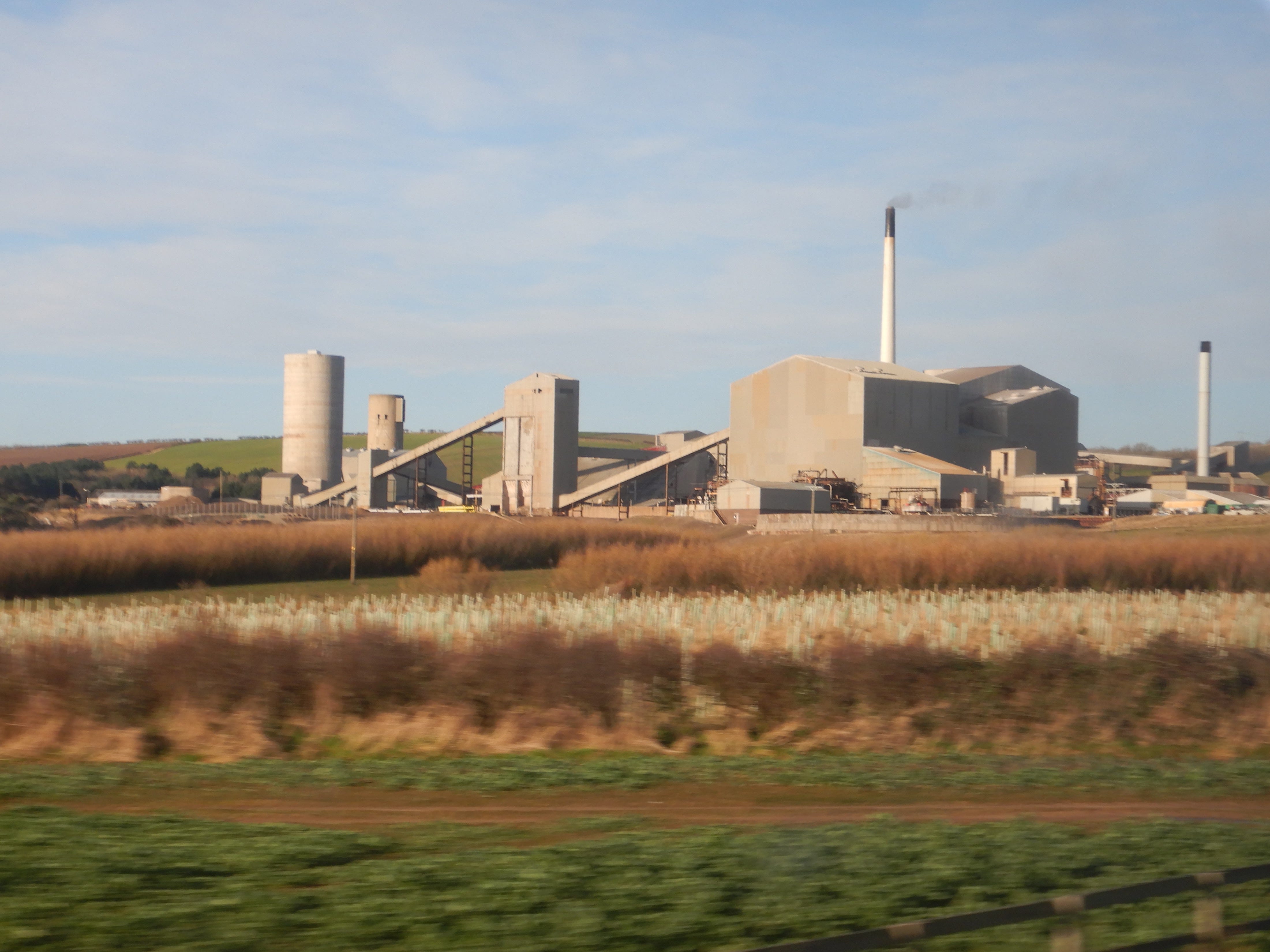
Above, the drive to the Lake.
Above: Once we parked, opened the steel doors, we started the long walk.


Excellent article Aaron. I recently wrote about the mineralogy of the Boulby Mine. How much volkovskite was there?