
Pegmatite No. 206
A classified Soviet mine, a physicist no one can find, and the crystal that connects them to quantum computing.

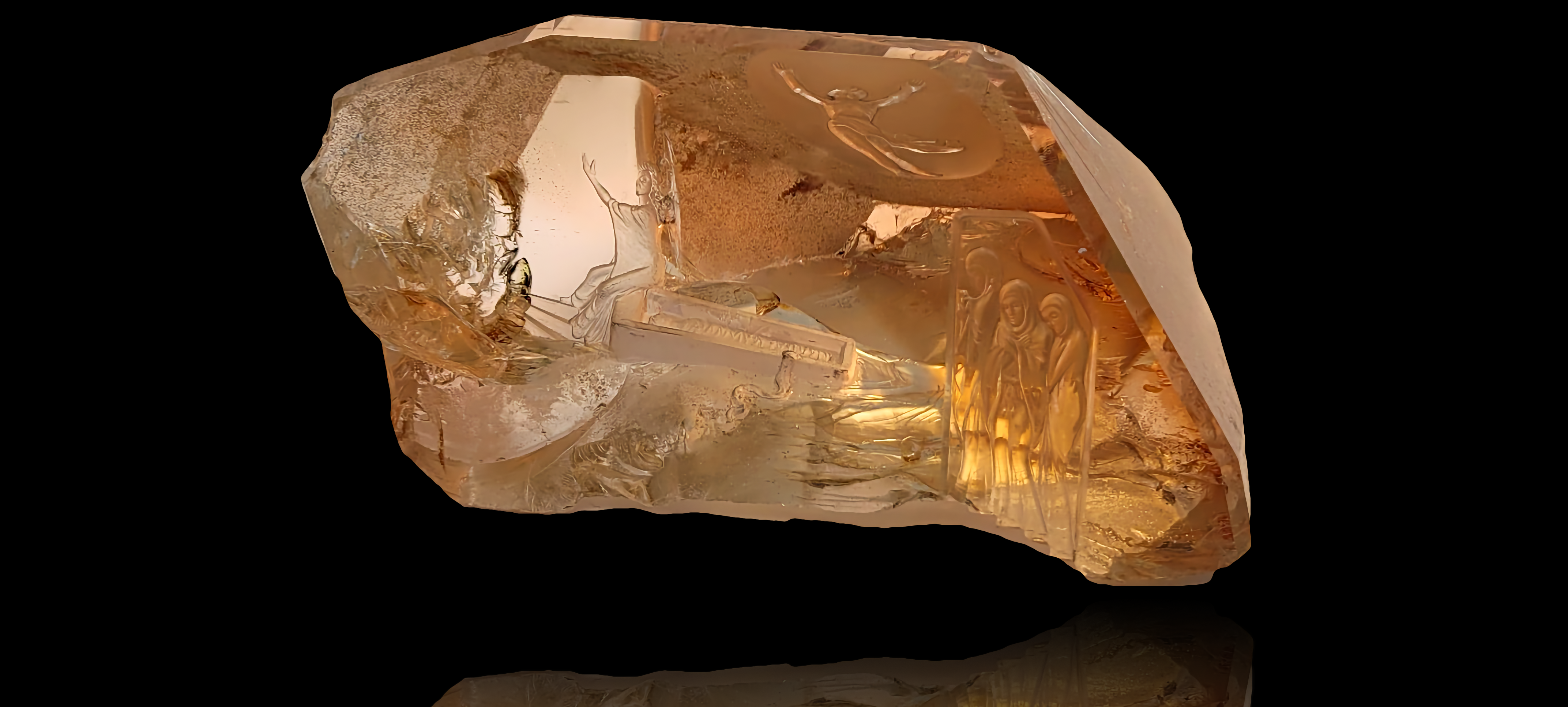
Zhytomyr Oblast
In 1931, the Soviet state began mining a classified deposit in northern Ukraine. The mission was quartz — but not just any quartz. A radio transmitter and its receiver lock onto the same frequency because a precisely cut quartz crystal vibrates at an exact, unwavering rate — without it, one end drifts, and communication breaks down. Inclusions, internal stress, growth defects — any imperfection corrupts the signal. The crystals have to be nearly flawless and large enough to cut. Most quartz in the world isn’t. The deposit at Volodarsk-Volynski was. For decades it supplied the Soviet military with the raw material to keep its communications from drifting. The West had solved this problem with synthetic crystals by the 1970s. The Soviet Union kept digging.
The mine employed over a thousand miners and sixty geologists at its peak. Six main shafts. Three levels. 110 kilometers of cold, wet tunnels running beneath the farmland of Zhytomyr Oblast. It was a state secret — Western scientists weren’t allowed underground until 1995, just as the operation was shutting down, the men who had worked those tunnels earning between ten and twenty dollars a month for the privilege.
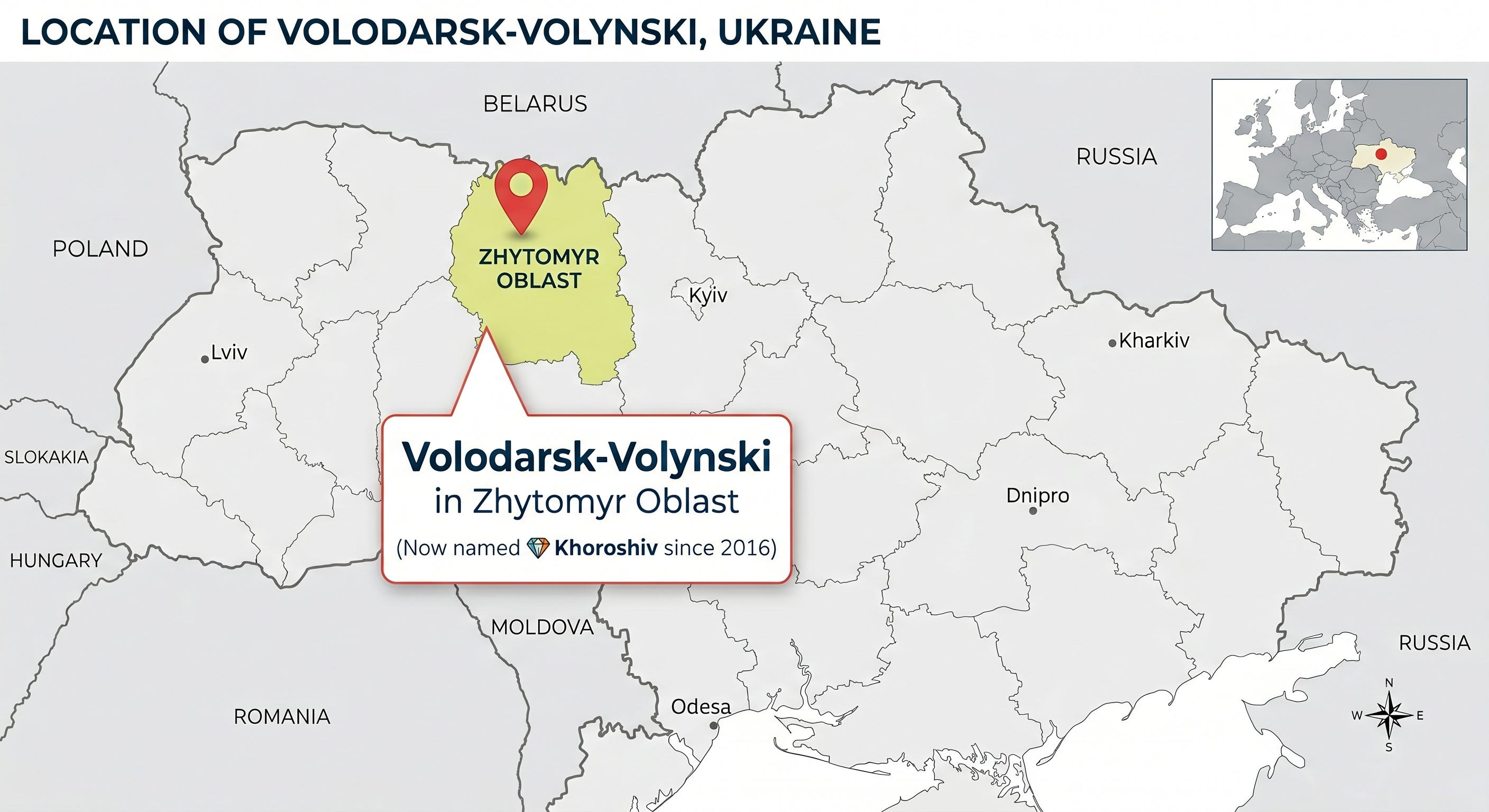
A pegmatite is what happens at the end of a granite’s life. As magma cools and crystallizes, the common minerals claim their elements first — feldspar takes the potassium, quartz takes the silica, mica takes what’s left. Everything that doesn’t fit gets pushed forward, concentrated into the remaining melt. Water. Fluorine. Rare metals. Elements that have been wandering through kilometers of rock for millions of years, never finding a home, now crammed together into a shrinking pocket of fluid that is becoming stranger and more chemically extreme with every passing degree of cooling. By the time this residual melt crystallizes, it is so enriched, so volatile-saturated, so unlike ordinary granite that the minerals it produces are outsized, rare, and occasionally extraordinary. The crystals don’t grow in millimeters. They grow in meters. This is a pegmatite — not a rock type so much as a last act, the Earth concentrating everything it couldn’t place anywhere else into one final, spectacular crystallization event.
Those cavities are called pockets. The name is accurate — most of them are roughly the size of the pocket in your pants. A few grams of mineral, a geological curiosity. But at Volodarsk-Volynski, the pockets were something else entirely. The Korosten pluton, the 1.77-billion-year-old granite body that hosts these pegmatites, produced cavities on a scale with no real parallel on Earth. Some were the size of a room. Some were the size of a ballroom — the largest measured pocket ran to nearly 8,000 cubic meters, with quartz crystals hanging from the ceiling like stalactites, some weighing a ton each. Sealed. Undisturbed. Growing in isolation for so long that the number becomes meaningless — hundreds of millions of years of nothing happening, and then a Soviet drill bit breaking through the ceiling.
Men who spent weeks underground at a stretch — working twelve hours, sleeping twelve hours, same clothes, cold water seeping through the walls — occasionally came out with something in their pockets. Not quartz. The quartz belonged to the state. But a piece of orange topaz, small enough to carry, extraordinary enough to remember — that was worth something to someone, somewhere. This is not ancient history. Miners at the Boulby potash mine in Yorkshire still pocket volkovskite, one of the rarest minerals on Earth, and sell it on Etsy. The director found out. He didn’t particularly care. Some things are too beautiful to leave in the ground.
The Soviet version carried different stakes. The mine was classified. Taking material from a state installation — even a crystal the state had no particular interest in — was theft from the people, which in Soviet legal terms was not a minor matter. There was no HR department. There was no grievance procedure. And the mine administration was not oblivious to the value of what was down there. Their cleverest tactic for controlling unauthorized collecting was to surround an empty pit with barbed wire and post signs reading “No Trespassing — Violators Will Be Prosecuted.” Collectors crawled under the fence at night and dug frantically for hours. The pit contained nothing. The real pockets had no signs. The people running this operation understood exactly what the gems were worth, which means the miner who slipped something orange into his pocket understood exactly what he was risking. A man caught stealing from a secret mine had limited options for explaining himself, and the apparatus available to deal with him was not known for proportionality. The crystals that reached the Western market in the 1980s arrived wrapped in towels, carried out by dealers who described themselves as visiting on other business, sold through back channels at flea markets in Moscow. The beautiful things that came out of those tunnels came out carefully.
By 1991 the Soviet Union was gone. The mine kept running, the tunnels stayed cold, but the classified designation evaporated with the state that had imposed it. What came out of the ground after that moved differently — still informally, still through the networks that had formed in the dark years, but without the apparatus that had made those networks necessary. Exporting was never simple — inspections, mountains of paperwork, punitive payment laws — but the existential risk was gone. Dealers who had spent years building relationships in that world were perfectly positioned. The tunnels that had once required nerve to enter were now, simply, a mine.
Topaz forms in the most evolved, fluorine-rich part of these systems — late-stage fluids chemically aggressive enough to dissolve earlier-formed minerals and replace them. It crystallizes after most of the beryl is already gone, in solutions that are simultaneously the most extreme and the most productive in the pegmatite’s history. Most Volodarsk topaz is colorless to pale champagne. Blue occurs naturally in some crystals, its color the product of the same long irradiation that colors everything in these rocks. Imperial topaz — that specific orange-pink, saturated, warm — requires the right trace chemistry and the right radiation history and the right duration, all in the same crystal. Only about ten percent of the pockets at Volodarsk contained topaz at all. Imperial color represented a fraction of that fraction. The crystal that came out of Pegmatite No. 206 around 1993 was, by any measure, not supposed to exist.
Sometime around 1993, from a pocket in a pegmatite body that the Soviet geological survey had cataloged as No. 206, a crystal emerged from the Zhytomyr tunnels. It was imperial topaz — the rarest color variant of a mineral that forms at temperatures between 360 and 540 degrees Celsius, in fluorine-rich solutions so chemically aggressive they dissolve beryl on contact. The orange-pink color is not a coating or a treatment. It is the product of iron and chromium traces in the crystal lattice, irradiated by the surrounding granite for 1.77 billion years. You cannot manufacture that color. You can only wait for it.
Eye-clean. Its natural termination geometry — a form that would later matter enormously — created an interior that functioned almost like architecture when lit from below. And somewhere inside it, invisible until you knew to look, was a feather: a healed fracture plane, a record of a growth interruption that happened deep in the Archean. The crystal cracked, kept growing, sealed the wound. What remained was a thin planar inclusion, catching light differently than the surrounding topaz, floating inside the stone like a smear of breath on cold glass.
A physicist would eventually look at that inclusion and see a wing.
The Physicist
Konstantin Puzakov was not a gem carver by training. He was a physicist. He worked at the Moscow Engineering and Physics Institute — part of the Soviet state’s military-industrial atomic complex. In 1976, an accident left him unable to continue. He was in his early forties, with time, a small apartment on the outskirts of Moscow, and a background in optics that most artists don’t have and most jewelers wouldn’t think to use.
He turned to stone.
He couldn’t buy cameos in the Soviet Union — access to gems was tightly controlled, restricted to a licensed few. So he went to the Hermitage and studied what was there. He started collecting whatever he could find. His apartment filled up with stones. He taught himself mineralogy. He began carving with dental instruments because there was nothing else, then graduated to custom diamond-tipped tools, ordered one at a time from an acquaintance at a local institute — specifying the exact diameter and taper for each cut. The resulting collection, stashed in a corner of his apartment, looked like a dentist’s tray waiting for its next patient. Most of his work took place under a microscope, etching life into stone one grain at a time, which is not a metaphor.
What separated Puzakov from other carvers wasn’t patience — though he had extraordinary patience. It was that he refused to treat the stone as a surface. Most cameos work with color: you carve into a layered stone, and the image emerges from the contrast between strata. Puzakov wanted something the stone’s interior could do that its surface couldn’t. He had spent his career thinking about how light behaves inside materials — how it bends, reflects, focuses, scatters. He understood that a facet is a lens, that an etched surface is a diffuser, that depth perceived through a transparent crystal is not an illusion but an optical fact governed by refractive index and the geometry of the cut.
Under his hands, the interior of a stone became a space. Not a representation of space — an actual optical volume, with foreground and background, light entering from one angle and exiting from another, surfaces that caught and redirected illumination the way a physicist would calculate, not the way an artist would guess.
He worked almost exclusively in topaz, beryl, and ruby. Hard stones with high refractive indices, stones whose interior geometry could be controlled with precision. He had a clientele that ran from private collectors to the highest official of the Russian Orthodox Church. His secular subjects — Dante, Nefertiti, a Russian prima ballerina — carried the same quality the Lapidary Journal would later describe as an inner light. When he carved a scorpion into an orange topaz against a background of the constellation Scorpio, he put the scorpion and the stars on opposite sides of the stone and let the crystal’s own optics collapse the distance between them.
Once, carving a crucifixion into a small citrine, he looked up to find the stone filled with red light. He didn’t touch it. Sat very still. Then he traced it — the setting sun had reflected off a red-covered book on his bookcase, through his apartment window, and into the stone. He understood immediately what had happened, which didn’t make it less extraordinary.
No one has been able to find Puzakov in recent years. Death records have been searched. Contacts in Russia have looked. AI has been deployed. He remains, for now, unfindable. You have almost certainly never heard of him. The work is in museums. The artist is missing. These things are related.
Golden, Colorado
In the mid-1990s, a man named Alex Grizenko was importing colored stones from the former Soviet republics into the United States. He had been doing it since 1991, building a business — Russian Colored Stone Company, based in Golden, Colorado — around materials the Western gem market had barely seen: alexandrite, chrome diopside, demantoid garnet, heliodor beryl, topaz from the Volodarsk-Volynski deposit. He was among the first Americans to recognize what was coming out of those tunnels after the Soviet state collapsed and the classified designation evaporated. By 1995, he was showing imperial and bicolored topaz at the Tucson Gem Show and drawing serious attention from gem writers and photographers.
By the 1980s, “blue topaz” had become shorthand for cheap — colorless stones irradiated in nuclear reactors, selling for a few dollars a carat. What Grizenko was showing at Tucson was something else entirely. You can see the difference immediately. One color came from a reactor. The other took a billion years.
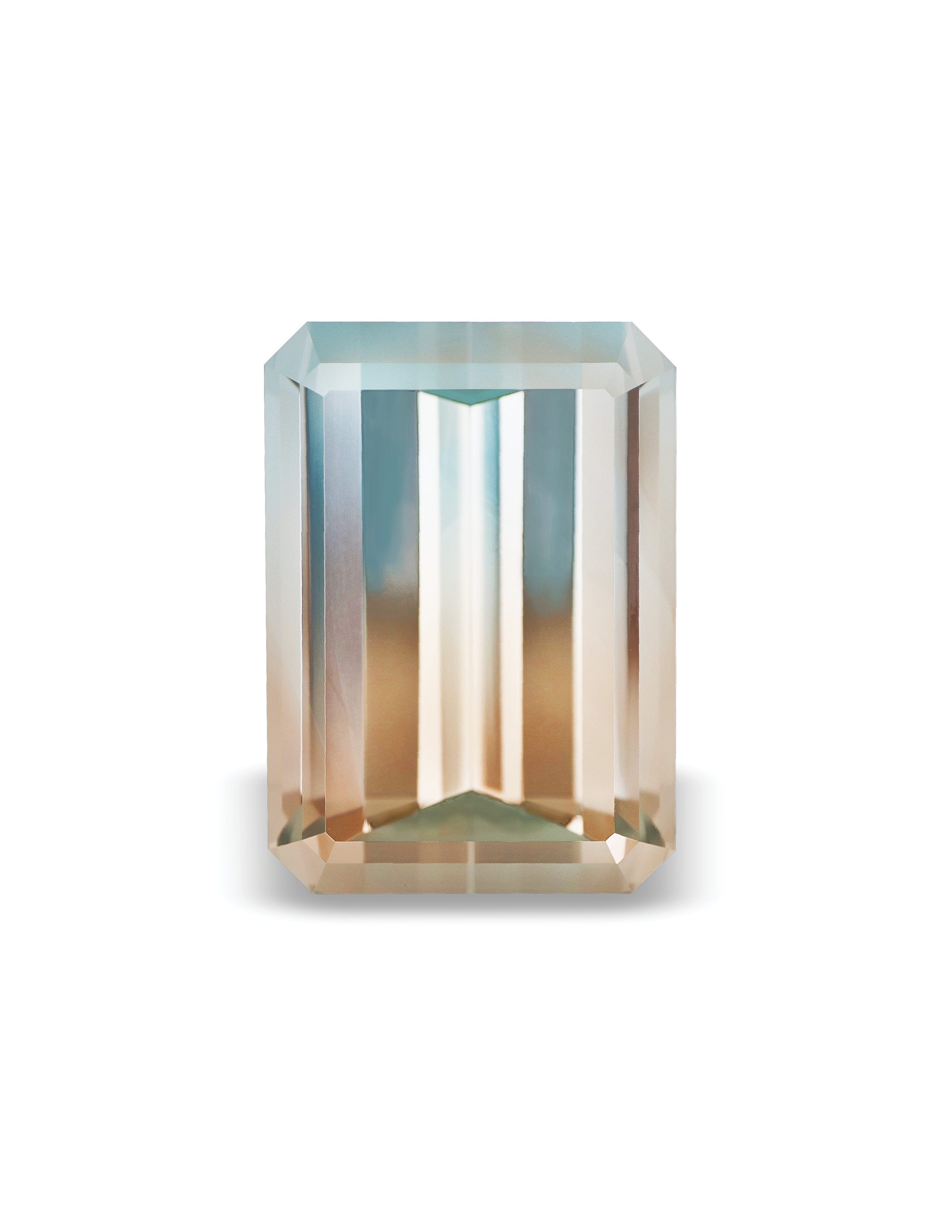
He had also discovered Puzakov. The first piece Grizenko purchased was Venus on the Half Shell — imperial topaz, Puzakov’s work, acquired directly. His reaction, as he remembers it: “Let’s get into carvings.” He commissioned three more. Two more were discussed after that but never made — they couldn’t find imperial topaz of sufficient quality again. The third commission was The Resurrection.
The 1.2 kilogram imperial topaz crystal came to Grizenko through his gemologists in Moscow — he never held it himself before it went to Puzakov. He had only their word over the phone that it was the finest specimen of imperial topaz from this region they had ever seen. On that basis alone he acquired it. A month after acquisition, certain faces were polished to Puzakov’s requirements. Then it went to the artist with one straightforward request: use as much of the crystal as possible. Grizenko also asked for something non-religious — given Puzakov’s well-documented inclination toward religious subjects, it seemed worth saying. Whether that message was ever clearly conveyed to Puzakov is something Grizenko, thirty years later, is still not entirely sure about.
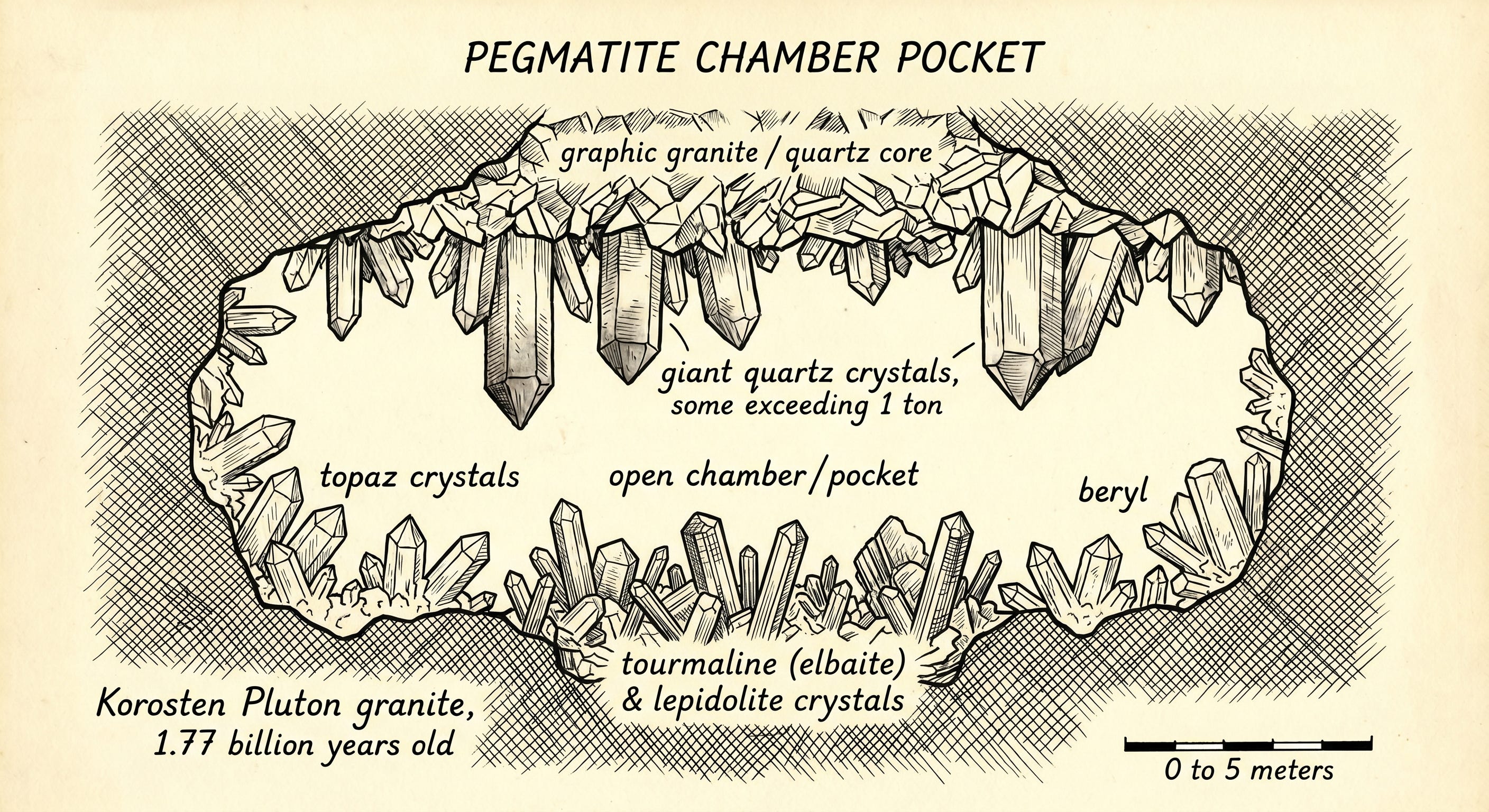
Puzakov studied the crystal for an extended period before he touched it. This was his method — he needed to understand the stone’s geometry completely before committing a single cut. Where the light entered, how it traveled, where it pooled. A mistake in a stone this size and quality was not recoverable. The crystal’s naturally etched, prismatic surfaces created a cavernous interior space when lit from the sides and below, with the color deepening toward the base. The natural indentation on one face read, under the right light, as an opening. And then there was the feather — and Puzakov, when he finally rotated the crystal into the right light, understood immediately what it was for.
From one angle it was nearly invisible, a hairline caught in the amber interior. Tilt it slightly, and it caught the light differently — a thin bright plane floating inside the stone, old as anything on Earth.
He built the entire composition around it.
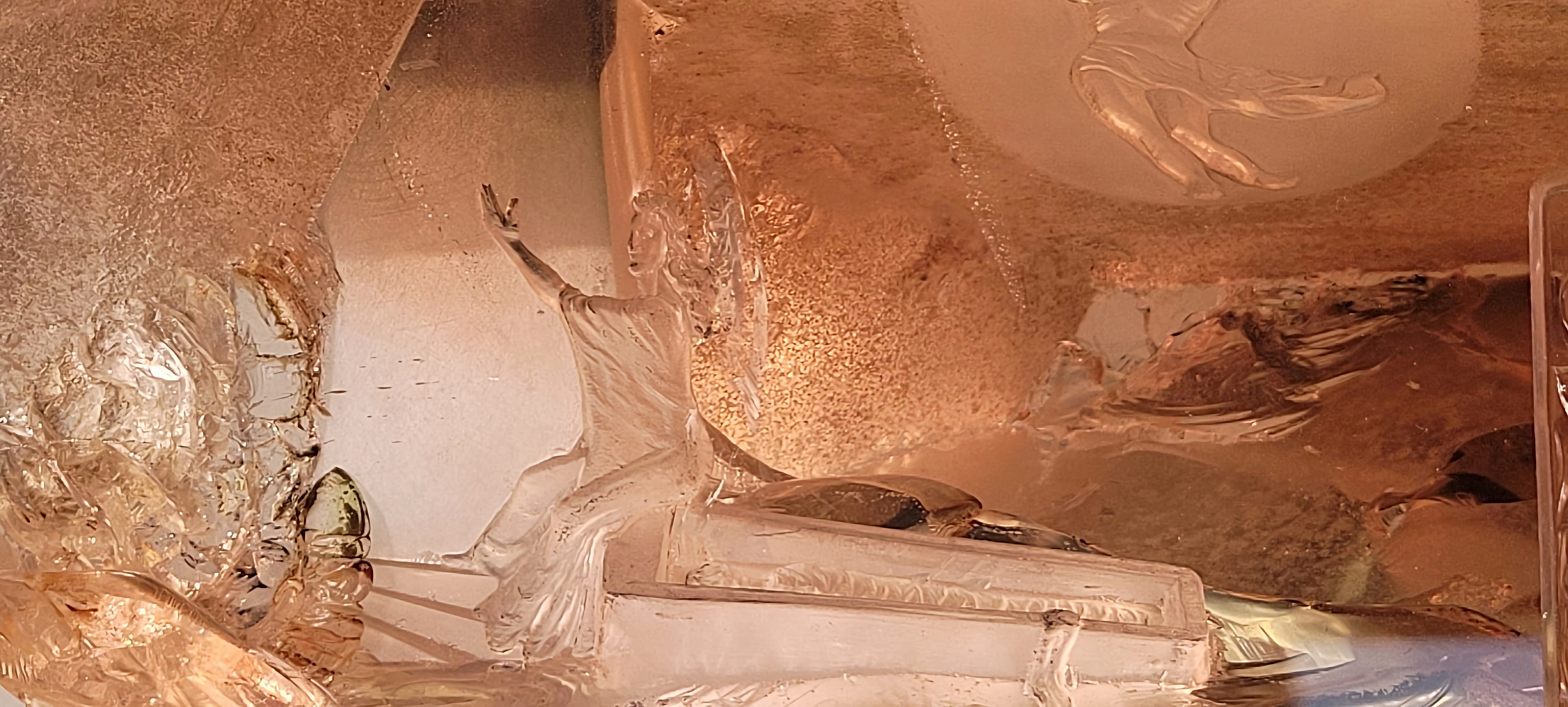
The carving that emerged — executed in intaglio and reverse intaglio, the figures receding into the stone rather than projecting from its surface — depicted a scene set inside a cave. Three women approach an entrance. An angel sits on an open tomb. The steps, the tomb, the serpent beside it are all reverse intaglio, cut into the interior with diamond-tipped tools under a microscope, visible only because Puzakov had calculated exactly how light would travel through the stone to illuminate them. The angel’s wing is the healed fracture. He didn’t carve it. It was already there, waiting since the Archean, and he built everything else around it.
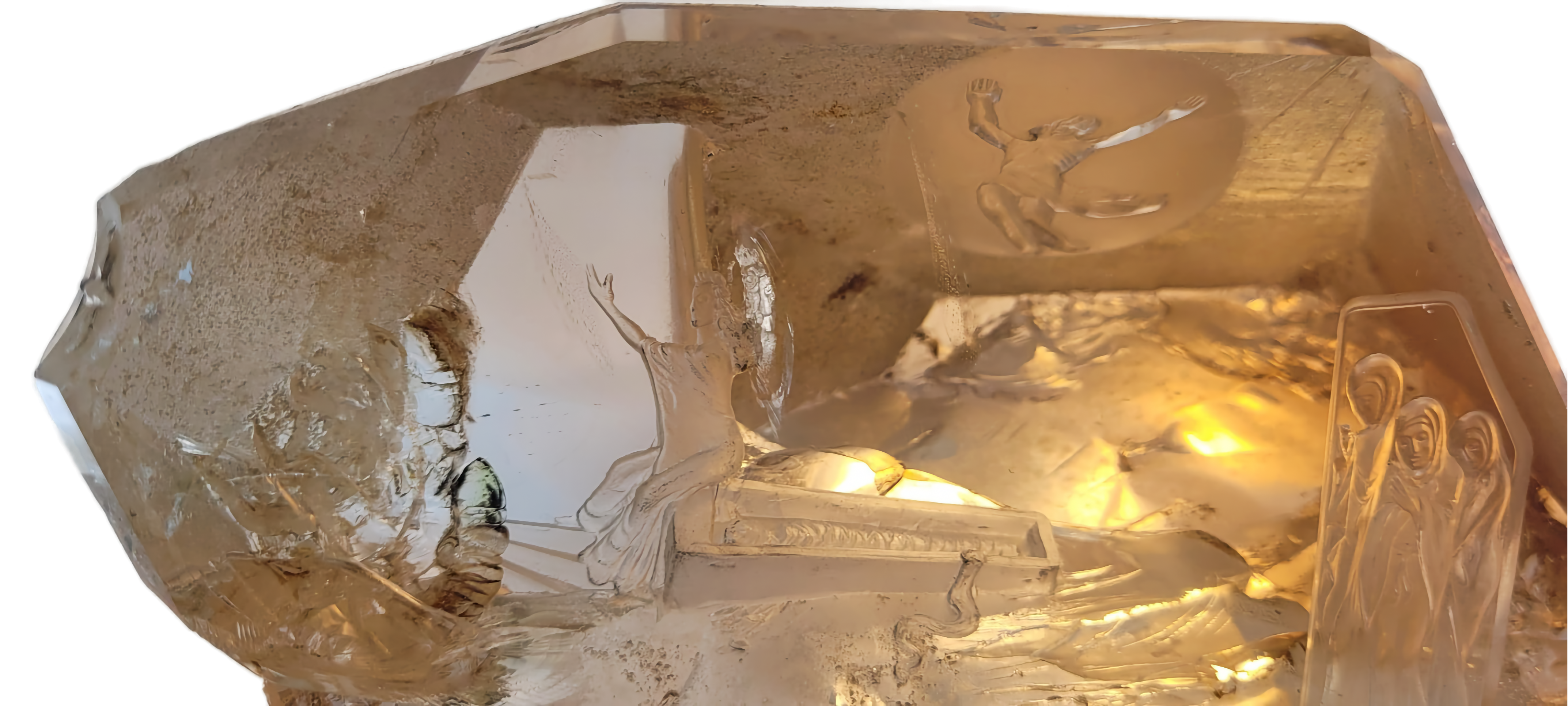
On the back face of the crystal, visible from the front through the stone, a figure rises. The composition is complete when you rotate it—front to back. The stone contains the whole narrative, each element placed where the crystal’s own optical geometry carries it to the eye.


The finished piece was shipped to Denver in 1996. Grizenko was shown it deliberately — from the bottom first, to extract bewilderment, then the back face where he met Jesus, then the front where he became, as he describes it, instantly amazed. His captivation has now lasted thirty years.
He had asked for something non-religious. He got the Resurrection. The carving was exhibited at several venues. In 1999, Lapidary Journal sent its leading writer to Moscow to interview the artist. The resulting piece called Puzakov “The Illuminated Man.” His works were in museums and with private collectors. He remained largely unknown outside a small circle of gem specialists — which is its own kind of crime, though a quieter one than what happened to that 117-kilogram topaz crystal they found in 1965 and didn’t bother to preserve.
What the Flaw Became
There is a version of this story where the crystal is just a crystal. Pulled from a sealed Archean pocket after 1.77 billion years in the dark, passed through the informal economy of a collapsing Soviet state, acquired by an American who trusted his gemologists’ word over the phone. It ends in a display case, and that’s fine.
But Puzakov looked at the flaw and saw the composition. Not metaphorically — literally. The healed fracture plane was the optical element around which everything else was organized. Remove it, and the carving collapses. The wing is not carved. It was there before Puzakov was born, before the Soviet Union existed, before there were humans to notice it. He found it, understood what it was doing inside the stone, and built around it.
This is what mineralogists mean when they talk about reading a crystal — not mysticism, not projection, but a trained understanding of how a specific material records its own history. In inclusions. In growth interruptions. In the geometry of fracture and healing. Puzakov had a physicist’s fluency with light and a carver’s patience with stone — a combination that the history of gem carving has produced in almost no one else who could claim it.
Alex Grizenko is now president of Lucent Diamonds, a company he founded in 2000 known for breakthroughs in diamond synthesis and the engineering of nanodiamonds for quantum sensing and processing. The applications depend on precisely engineered imperfections in the crystal lattice — defects placed at exact atomic locations — because a perfectly flawless diamond is useless for quantum sensing. The defect is the functional element. The diamond has to be nearly perfect everywhere except exactly where it isn’t.
Grizenko has thought about the parallel between the flaw in the topaz and the engineered defects in his quantum diamonds. He finds it resonant — and yes, a stretch, but good for storytelling. Which is honest, and worth saying. The connection he draws himself is cleaner: gemology, crystallography, physics. Adornment with crystals feeds the soul, he says. Engineered lattice defects in diamonds create new quantum sources of information. He sees no contradiction.
The arc is stranger than it looks. He started with colored stones from a classified mine in Ukraine, ended up growing diamonds atom by atom for navigation systems and medical diagnostics, and somewhere in the middle commissioned a carving that has captivated him for thirty years. The flaw in the topaz was accidental — a crack that healed in the Archean and waited. The flaw in the diamond is designed. The point, either way, is the flaw.
The Resurrection is coming to the Hixon Gem and Mineral Vault at the Natural History Museum of Los Angeles County. When you stand in front of it, you will see a carving of extraordinary technical and artistic accomplishment — intaglio and reverse intaglio figures inside a crystal that glows orange-pink from its own internal geometry, lit from within by a man who understood exactly how light moves through topaz, and all of that is worth the trip on its own.
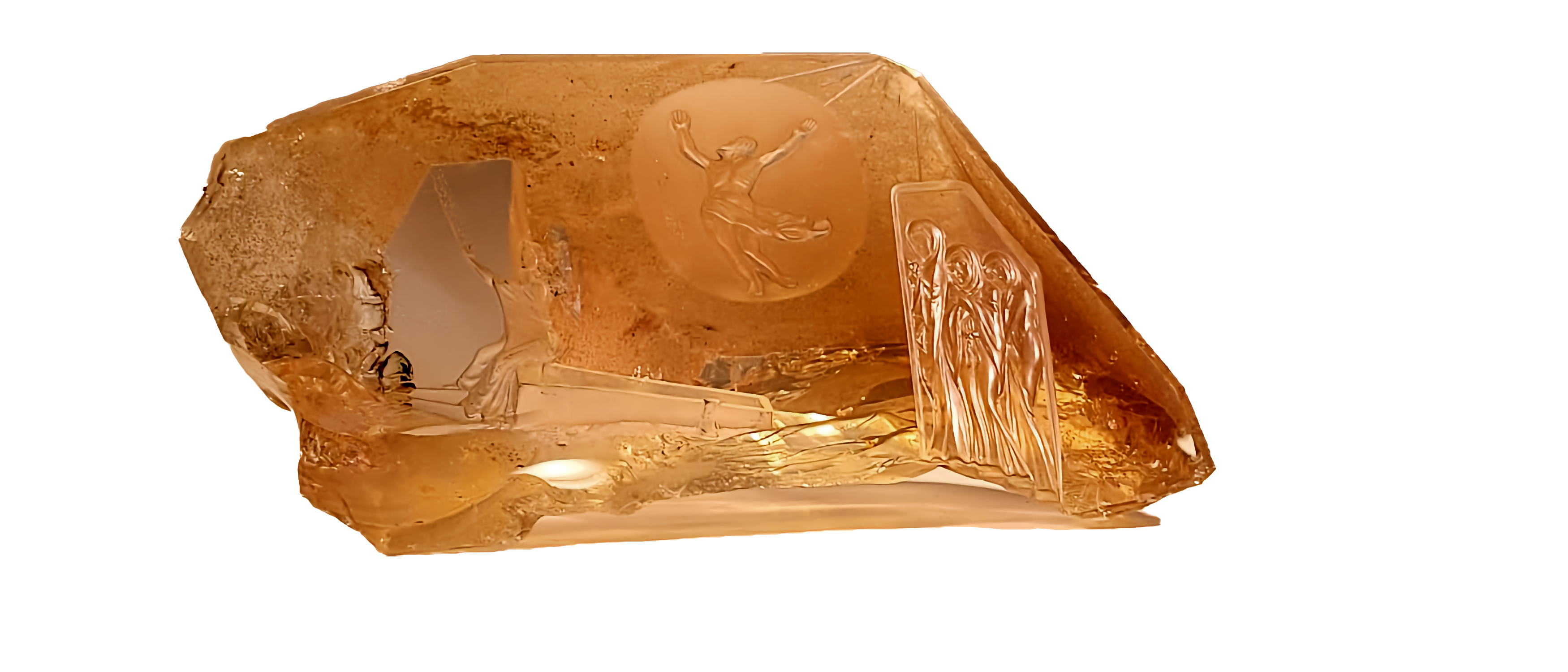
Less visible is the old fracture floating inside the stone that started everything. It appears, from one angle, as a hairline. Rotate the crystal slightly, and it catches the light.
That is the wing — where Puzakov began, and where everything else followed from.
About 1.77 billion years in the ground. Thirty years above it, adorned with symbolic carvings. And now here, in Los Angeles, in a vault built for things that deserve to last.
Sources: Lyckberg, P., Chornousenko, V., and Wilson, W.E. (2009). Volodarsk-Volynski, Zhitomir Oblast, Ukraine. The Mineralogical Record, 40, 473–506. Katz, R.V. (1999). The Illuminated Man. Lapidary Journal, December 1999. Federman, D. (1995). Bi-Colored Topaz: Dual Delight. Modern Jeweler, June 1995. Personal communication: Alex Grizenko, 2025.