
Everywhere Except Here
What troilite tells us about living on an oxygen planet

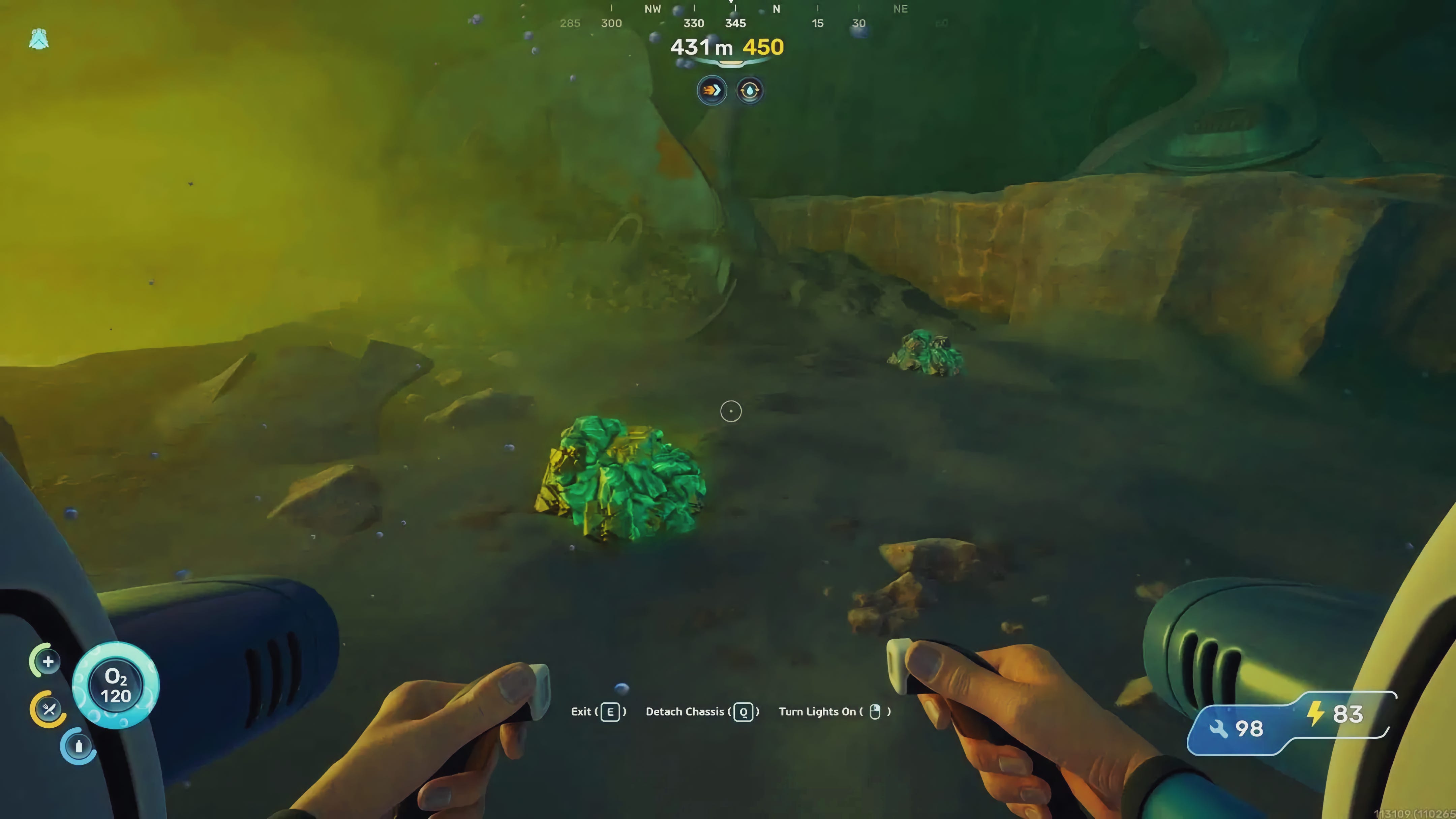
I was not expecting to stop.
Subnautica 2 had been out for only a few days. I was deep in a late-game biome called the Root Canyon — the Metal Farm — roughly 1,000 meters east-northeast of where the game starts, which, in an alien ocean, feels genuinely remote. You need special equipment to get there. The game does not hold your hand at this depth. I was scanning mineral deposits the way you do in survival games, half on autopilot, building inventory.
Then a word appeared on screen.
Troilite.
I stopped swimming.
Not because it was rare — though it is, the rarest mineral Unknown Worlds placed on this alien ocean floor. I stopped because I knew what that word meant. I knew it the way you know the name of something you once had a very bad night with.
The last time I encountered troilite’s close relative, I was a graduate student at Stony Brook University on Long Island, it was eight or nine o’clock at night, and by the following morning, I had very nearly burned the geology building to the ground. I cleaned up the evidence alone. I was terrified. If anyone noticed, they were generous enough never to say so.
That was decades ago. I had not thought about that night in a long time.
A video game brought it back in about four seconds.
(If you don’t play video games, stay with me. The game is just where the mineral turned up. The mineral is what matters. It always was.)
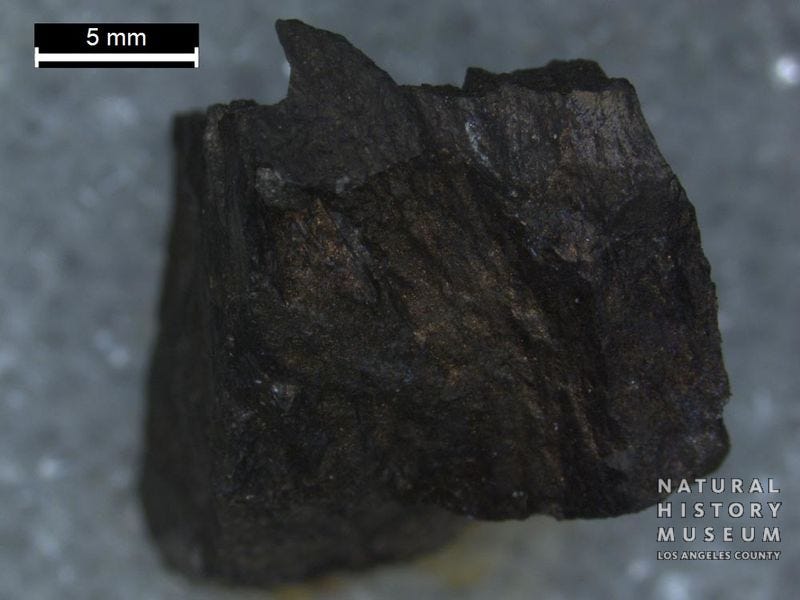
You have never seen it in a rock. Almost nobody has. It’s not a question of rarity in the universe — troilite is common in meteorites, a major constituent of lunar samples, and a likely component of planetary cores throughout the solar system. The problem is time, pressure, and where you are standing.
The FeS system is not a single mineral. It is a family of minerals — different crystal structures, different stabilities, different addresses in the phase diagram — each one stable under a specific set of conditions and unstable everywhere else. Mackinawite forms first at the surface in cold water under ambient pressure. It is where the system begins. Troilite comes later, deeper, under heat and pressure — the stable form that planetary interiors produce when they have the time and the weight to do it properly. Push troilite deeper still, and it transforms again, and again, through at many distinct phases, all the way down to conditions at the center of some rocky worlds.
Each phase is an address. The mineral that exists at that address is the one that physics allows.
Our atmosphere is the reason you can’t find these minerals here. Not because it destroys them violently — troilite is stable enough to sit in a museum collection, to survive handling, to hold its structure in a specimen drawer. The problem is geological time. Given enough of it, oxygen works its way into the surface, iron oxidizes, sulfur escapes as sulfate, and what was troilite becomes something else entirely — a weathering rind, a rust stain, a ghost of the original phase. High-troilite meteorites left in humid environments rust and disintegrate over years. Severely weathered ones show complete replacement of troilite by iron sulfate. The atmosphere doesn’t combust it. It simply, patiently, wins.
This is why you only find troilite in meteorites — objects that spent billions of years in the oxygen-free cold of space and arrived here recently enough that the erasure isn’t finished yet. The specimen in the NHMLA collection carries a fresh dark surface and, if you look closely, the beginning of a greenish weathering rind where the atmosphere has already started its work.
Our sky is not violent toward troilite. It is relentless.
Roughly 2.4 billion years ago, photosynthetic life flooded Earth’s atmosphere with oxygen — the Great Oxidation Event — and minerals like troilite retreated from the surface permanently. Not in an instant. Over millions of years, the argument tipped. Down into the interior. Into the deep ocean floor. Into space. To find troilite you have to go somewhere the atmosphere hasn’t reached, or hasn’t had enough time.
Subnautica 2 is set on an alien ocean world. The game placed troilite 2,000 meters from the surface, in the most remote biome, locked behind a tool you have to build specifically to extract it. No oxygen down there. No explanation offered to the player.
Whoever named it knew exactly where it belonged.
Here is what happened at Stony Brook.
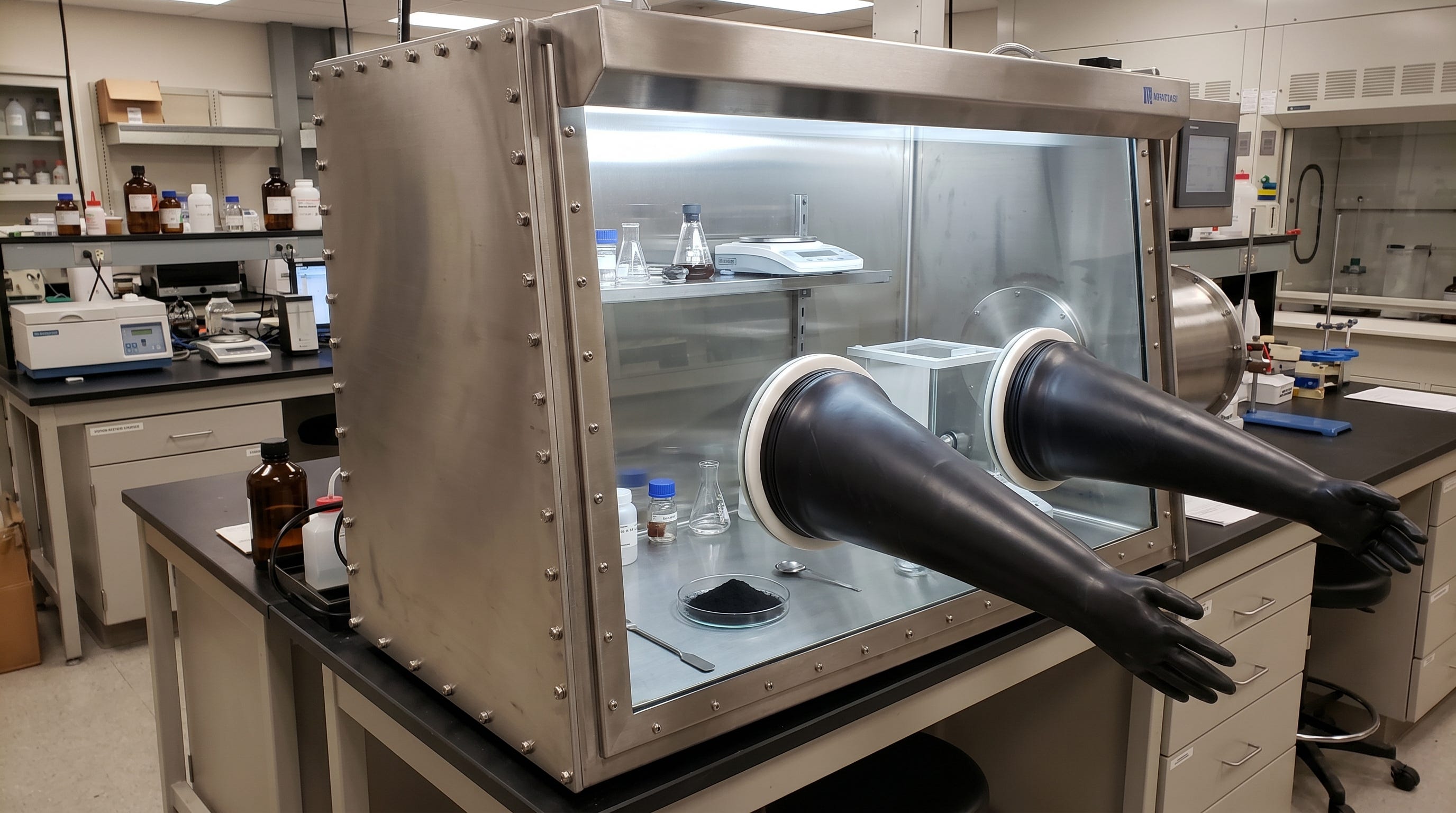
Mackinawite is troilite’s close relative — the iron sulfide phase that forms at the surface, in cold water, at ambient pressure. The low-address member of the family. Where troilite loses the argument with oxygen over geological time, mackinawite doesn’t wait that long. It is genuinely reactive, genuinely dangerous under the wrong conditions, and I was making it by aqueous precipitation in a glove box because I needed to understand the iron sulfide family from the inside out. You cannot understand a mineral by reading about it. You have to make it. You have to be in the room with it.
The synthesis required a glove box — a sealed chamber filled with nitrogen, no oxygen, where you work through thick rubber gloves built into the walls. I had grown the mineral in solution, filtered it out as a fine black powder, and set the container aside inside the box, still under nitrogen atmosphere. Standard procedure. I went home.
I came back the next morning.
The glove box was full of smoke. The container had melted. The black powder — my mackinawite, hours of careful synthesis — had essentially combusted overnight while I was gone.
I stood there for a moment trying to understand what I was looking at.
The culprit was a pinhole leak in the glove box seal. Somewhere in the gasket, invisible, there was a gap. Atmospheric air had been infiltrating the nitrogen atmosphere all night. Not much. The leak was so small that the box had appeared to be holding pressure. But mackinawite doesn’t need much. Parts per billion of oxygen had been enough to trigger an exothermic oxidation reaction that built heat slowly through the night until the container couldn’t hold it anymore.
I cleaned it up alone. I told no one. I was a first-year graduate student, and I had just discovered, in the most direct way available, what it means for a mineral to be at the wrong address. Mackinawite belongs in cold anoxic water, in hydrothermal sediments, in the kind of oxygen-free dark where the atmosphere has never reached. The atmosphere had gotten in. The atmosphere always wins.
What no textbook quite captures — what you can only learn by standing in front of a melted container at eight in the morning — is that these minerals are not passive objects. They are phases in an ongoing chemical argument between a planet and its atmosphere. On the early Earth, before photosynthesis, mackinawite and troilite were stable at the surface. Life changed that. Life flooded the sky with oxygen, and these minerals lost the argument and retreated. They have been hiding ever since.
I cleaned up the evidence of that argument and went back to work.
The mackinawite I made at Stony Brook eventually went to Sandia National Laboratory in New Mexico — to the LANCE beamline, a spallation neutron source. Neutrons see things X-rays cannot. I needed to know where the hydrogen sites were in the mackinawite structure, and how they changed under pressure. Specifically, deuterium — the heavy isotope of hydrogen, which neutrons can resolve precisely. Mackinawite at the bottom of a cold anoxic ocean, threaded with hydrogen, under pressure. These are the same conditions, the same minerals, the same chemistry that may have catalyzed the first biochemistry on Earth. Whether life began at hydrothermal vents is still an open question. The minerals were already there, doing what minerals do, whether or not anything noticed.
The near-disaster at Stony Brook didn’t stop the work. It focused it.
If these minerals were this insistent on belonging to specific environments — if mackinawite belonged to the surface and troilite belonged deeper — then the question of how deep troilite could go, and what it became when you pushed it further, was worth asking. The answer pointed inward. Into planets. Into the cores of rocky worlds where pressure is measured in gigapascals and oxygen has never reached and never will.
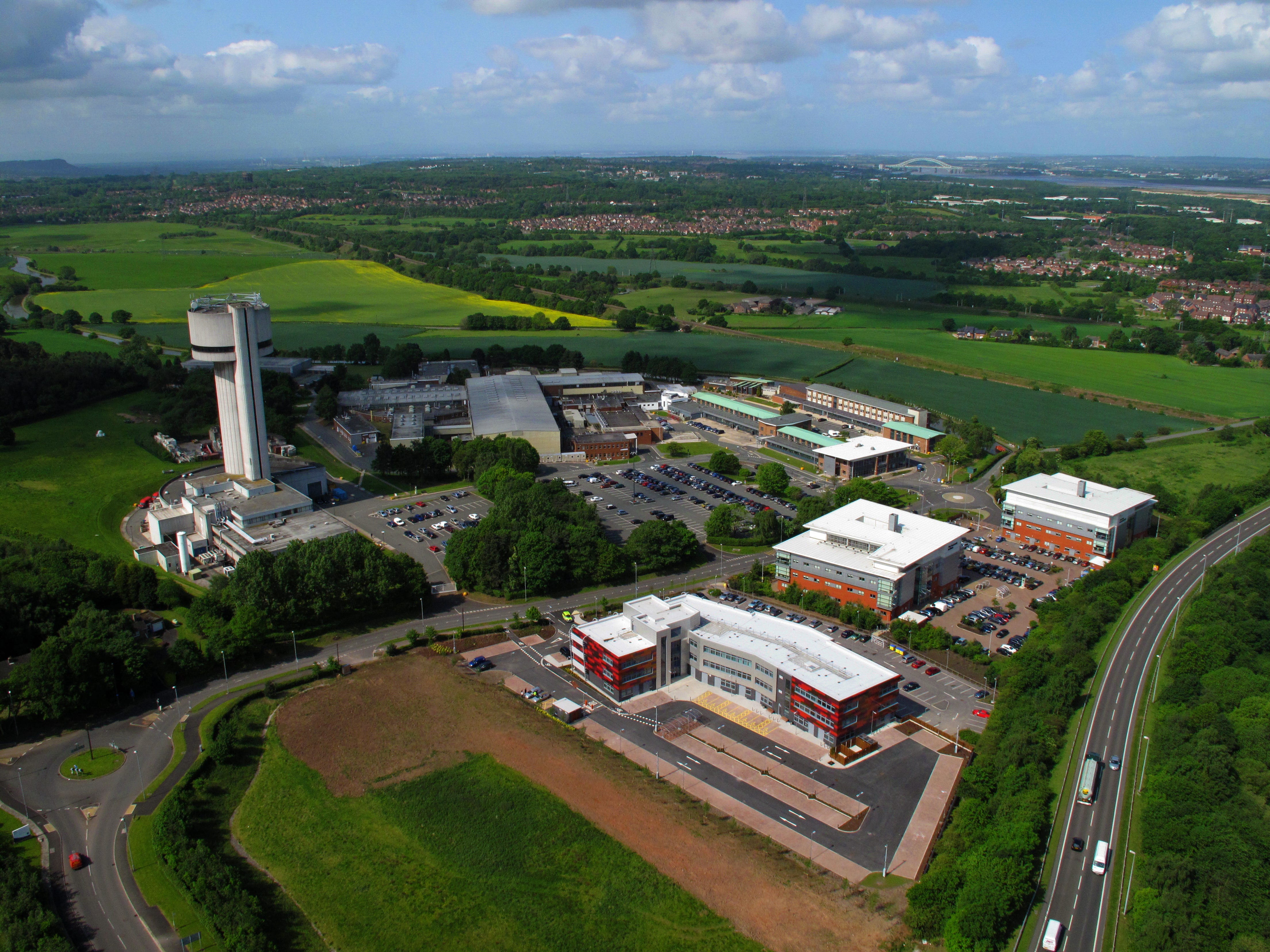
Which is how I ended up at Daresbury Laboratory in Cheshire, England, watching the status of an electron storage ring on a pub television instead of a football match.
Daresbury was one of the world’s synchrotron facilities — a particle accelerator built in a ring roughly the size of a city block. It accelerated electrons to near the speed of light and harvested the X-rays they shed in the process. The beam that came out was orders of magnitude more intense than anything a standard laboratory can produce — intense enough to generate a readable diffraction pattern from a sample the size of a printed period, squeezed between two diamond tips under pressures equivalent to a planetary interior. A hospital X-ray machine would see nothing. Daresbury saw a crystal structure.
My experiment used a diamond anvil cell — two gem-quality diamonds, polished to fine points, positioned tip-to-tip with the sample between them. The troilite I started with had been synthesized in the lab under vacuum and high temperature — you have to recreate something close to planetary conditions just to make the starting material. Then you squeeze the diamonds together and the sample — a grain of iron sulfide roughly the size of a period at the end of this sentence — experiences pressures equivalent to the interior of a planet. You shoot the synchrotron beam through the diamond and read the diffraction pattern. The way the X-rays scatter tells you the crystal structure. As you increase the pressure incrementally, you watch the structure transform in real time.
What I was looking for: the behavior of FeS at pressures corresponding to the Martian core. Because the question of what is inside Mars is not purely a geology question.


It is a physics question. The orbital mechanics of Mars — how it moves around the sun, how its spin axis precesses over time — can only be fully reconciled if you know the density of whatever sits at the planet’s center. Get the mineral phase wrong, and the numbers don’t close. Get it righ,t and you have visited the interior of another planet without leaving England.
You do the experiment in shifts. The synchrotron runs continuously, and time on the beam is allocated in blocks. You work through the night when you have to. And periodically, the beam dumps — the accelerator releases its stored energy, the ring goes dark, the X-rays stop, and there is nothing to do. The experiment is paused. You cannot hurry a particle accelerator.
So you walk to the pub.
It is a short walk. The pub knows the Daresbury crowd. And on the television, where a normal pub in Cheshire would be showing football, the screen displays the status of the electron storage ring. The beam energy in megaelectronvolts. Whether it’s recovering. How long until the experiment can resume.
The beer was flat and warm.
I remember standing there thinking: what the hell am I doing here.
The answer, when the beam came back up and we walked back to the lab, was: trying to find out what’s inside Mars.
My data matched previous published work. No new phases. No surprises in the FeS phase diagram at Martian core pressures. The existing map was correct.
In science, replication is not failure — it is the foundation that makes knowledge reliable. Someone had been right before me, and now there was one more set of hands confirming it. That matters. That is how the edifice holds.
But it meant the Martian core question, along this particular line of investigation, was answered. I packed up the diamond anvil cell. My master’s program would need a new direction. I went home from England with clean data, a confirmed phase diagram, and a new question to find.
Subnautica 2 sold a million copies in the first hour.
Somewhere inside that studio, someone got the geology right. Troilite, 2,000 meters from the surface, in the dark, in an anoxic ocean, inside a mineralized clinker, locked behind a tool you have to build specifically to extract it. The rarest mineral in the game. No explanation offered. No in-game text about iron sulfide chemistry or the Great Oxidation Event or what this mineral means to the question of what’s inside Mars.
Just the word, in the right place, waiting.
A clinker, for the record, is the fused, glassy residue of high-temperature mineral processes — exactly the geological environment where iron sulfides concentrate. Whoever made this decision didn’t just pick an obscure mineral name. They put it inside the right rock.
I sent a message on Bluesky the same evening I found it. I told them I was the Curator of Mineral Sciences at the Natural History Museum of Los Angeles. I told them I nearly burned down a building working with troilite’s close relative in grad school. I told them I had used it to try to see inside Mars.
I asked: who told you about troilite?
They wrote back within hours. Troilite had gone into a mineralized clinker because that’s where it belongs. The art had been built to match the geological intent.
I was very happy with its depiction.
I am writing this for anyone who has ever followed a hunch into territory that wasn’t guaranteed to yield anything.
The experiment at Stony Brook could have burned down a building. It produced a melted container and a very quiet cleanup and a precise, bodily understanding of what it means for a mineral to be at the wrong address. The experiment at Sandia found the hydrogen. The experiment at Daresbury confirmed what was already known. The data matched previous published work. My master’s program needed a new direction.
None of it was failure. All of it was science doing exactly what science does — not marching forward in a straight line toward predetermined answers, but feeling its way through the dark, occasionally setting things on fire, occasionally sitting in a pub in Cheshire watching beam current on a television instead of football, waiting for a particle accelerator to restart so you can go back and keep asking.
Sometimes it’s new. Sometimes it confirms what came before and that confirmation is quietly, unglamorously necessary — the kind of result that doesn’t make careers but keeps the map honest. And sometimes you come back to the lab in the morning and the glove box is full of smoke and what you learn that day, alone and terrified, is something no textbook manages to convey: that these minerals are not passive objects. That they are phases in an ongoing argument. That the argument is still happening.
Someone sat down to design the resource economy of an alien world and asked what minerals belong in an oxygen-free ocean. They followed that question somewhere it wasn’t supposed to go for a game designer. They came back with troilite inside a mineralized clinker at 2,000 meters depth, and built it so faithfully that a mineralogist stopped swimming.
I went to Stony Brook and learned what the wrong address looks like from the inside. I went to Sandia and found the hydrogen. I went to England and squeezed troilite between two diamonds to find out what’s inside Mars. Nobody knew about the glove box. I didn’t tell anyone for decades.
A video game came out three days ago and put the word on an alien ocean floor in exactly the right place, and I stopped, and everything came back.
That is what it means to pay attention. You never know where the mineral is going to turn up next — in a glove box, in a diamond anvil cell, in a video game three days after it ships. Someone else might have been following the same question through a completely different kind of dark, and you’d never know unless you said something. I said something. They wrote back in four hours.
Aaron Celestian is the Curator of Mineral Sciences at the Natural History Museum of Los Angeles County, former scientist at NASA’s Jet Propulsion Laboratory, and adjunct professor at USC. He writes Pocketful of Χtals because mineralogy is stranger and more alive than most people have been told.
Thank you Aaron.. you tell a story so well.. Never heard of Troilite or Mackinawite before but now they have meaning to me. :-))
Thanks Aaron. Based on this post, I checked on my one and only mackinawite and found that it was mislabelled (a long time ago)! The label locality is given as Hitura, Sweden. But it apparently should be Hitura, Finland!